

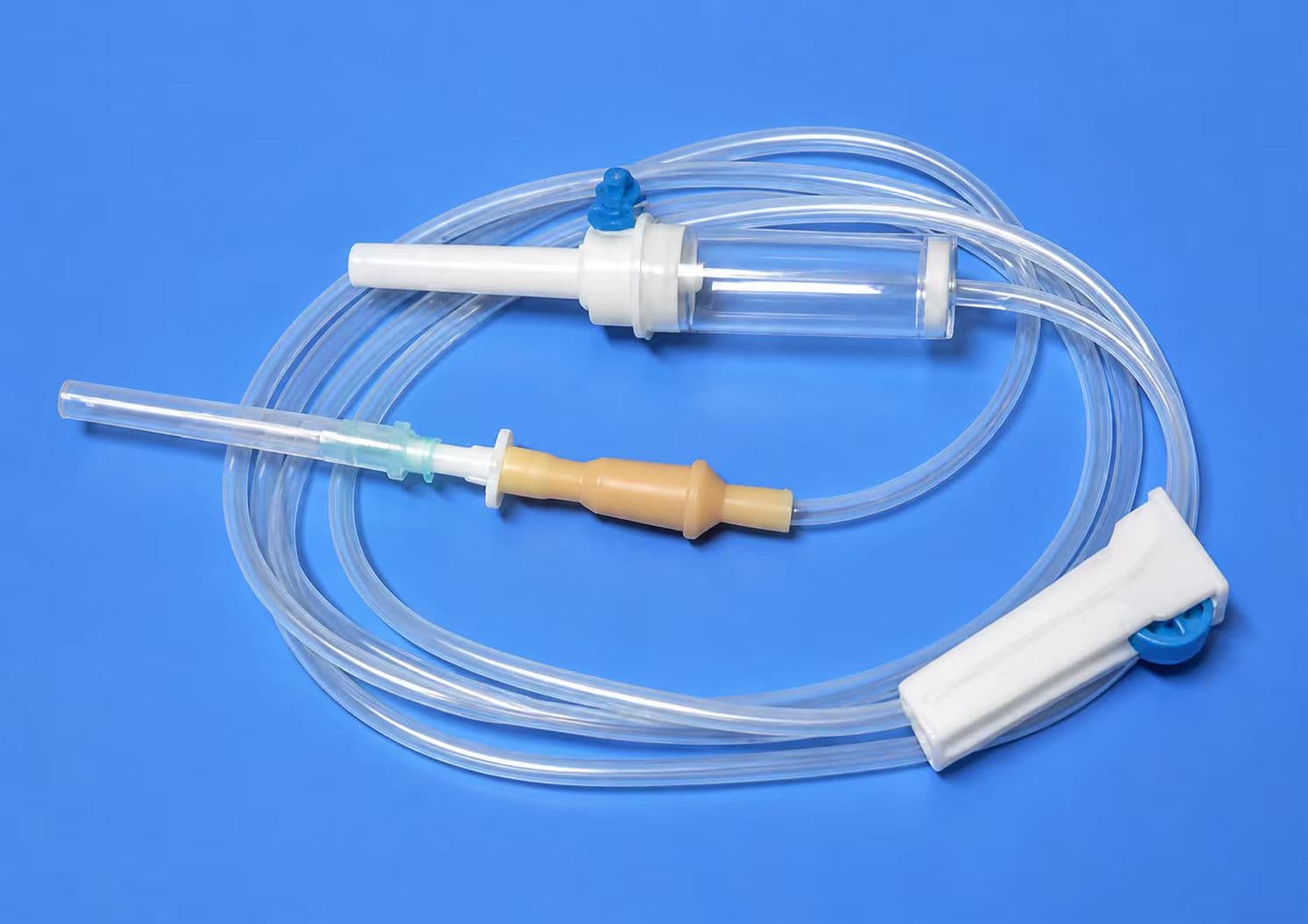
The sterilisation line on a quotation for sterile disposables is rarely priced separately and almost never scheduled. In March 2024 the US EPA finalised amendments to its air-toxics standards for commercial sterilisers, requiring roughly a 90 per cent cut in ethylene oxide emissions, with compliance windows tiered by throughput: two years for facilities using more than 60 tons a year, two to three years for the 1-to-60-ton group and three years for the smallest across roughly 90 facilities. The original proposal was 18 months, lengthened after the industry warned that plants already at capacity could close and leave a shortage of sterile devices. For an importer that is a lead-time story, not an environmental one. Contract EO capacity is the part of your chain you cannot expedite with a phone call, and the supplier who books cycle slots a month ahead quotes the same unit price as the one who books them when your deposit lands. The difference shows up as three weeks on the water.
Three routes, and the four questions that separate them
Each route has its own validation standard, and EN 556-1:2024 — the European requirement for labelling a terminally sterilised device "STERILE" — points to them by name: EN ISO 11135 for ethylene oxide, EN ISO 11137 for radiation, EN ISO 17665-1 for moist heat, plus EN ISO 14160, EN ISO 14937, EN ISO 20857, EN ISO 25424 and ISO 22441 for the other processes. A device may carry the STERILE designation only where a validated process has been applied.
| Route | Validation standard | How the process is set | Suits | What it does to your schedule |
|---|---|---|---|---|
| Ethylene oxide (EO) | ISO 11135 | Cycle development plus physical and biological performance qualification per load configuration | Heat-sensitive assemblies: infusion sets, catheters, airway devices, syringes | Cycle, then aeration, then residual testing and sterility release — the longest of the three |
| Gamma or e-beam | ISO 11137-1/-2/-3 | Dose setting; ISO 11137-2:2013 covers substantiating 25 kGy or 15 kGy for a sterility assurance level of 10⁻⁶, plus dose audits | Dense textiles and polymers that tolerate dose: gauze, dressings, nonwoven apparel | Fast release once dosimetry is in; capacity is booked by the pallet, not the carton |
| Moist heat (steam) | ISO 17665-1 | Load-based qualification; the load pattern is part of the validated process | Metal and heat-stable items, reusable instrument sets | Short cycle, but rules out most single-use plastics and all paper-film pouches with heat-sensitive seals |
Four questions settle which one you are buying, and a supplier who answers them in one email is quoting from a validation file rather than a price list:
- Which standard was the process validated to, and when was the last revalidation or dose audit?
- Is sterility release part of the quoted lead time, or added to it?
- Which laboratory issues the sterility and bioburden testing, and under which standard?
- For EO, which edition of ISO 10993-7 the residual limits were assessed against.
That last question is the one most buyers skip. ISO 10993-7 sets allowable EO and 2-chloroethanol residuals by exposure category — limited contact up to 24 hours, prolonged up to 30 days, permanent beyond that — with tighter arithmetic for neonates and infants. The figures have moved between editions, so a report means nothing without the edition it was assessed under. Ask for the cover page: edition, laboratory, sample reference, date.
Where two sterile-disposables quotations actually differ
Material is rarely the gap. The spread sits in six places, in roughly this order of money:
- Route substitution. A gamma price quoted against an EO-validated device, or the reverse, is not the same product. Changing route is a revalidation, not a setting.
- Validated load configuration. A cycle validated for one carton pattern does not automatically cover a denser pallet. Changing pack density to save freight can invalidate the cycle.
- Pouch and film specification. Paper-film pouch grade, seal width and peel strength are where a cheap sterile pack is cheap, and they are what fails after two transhipments.
- Batch definition. One sterility release per production batch is not one per shipment, and it decides how much of your order moves if a single result is out.
- Testing scope. Bioburden, sterility and residuals per batch, or per quarter on a type-test basis.
- Documentation set. A certificate pack built for your destination market costs the supplier time; a generic one costs you an import query.
RFQ fields, ordered by how much they move the number
Copy these into the enquiry. The first four change the price by more than the rest combined.
- Destination market, and whether the goods must be labelled sterile there.
- Sterilisation route required or accepted, and whether you will accept an alternative on revalidation.
- Sterility assurance level and the standard you need it evidenced against.
- Pack format: single pouch, inner bag, or bulk-sterile for a repacker.
- Shelf life required at delivery, not at production, and the batch definition for release.
- Residual testing requirement and the ISO 10993-7 edition to assess against.
- Inspection regime, the stage it happens at, and who pays.
- Annual volume, call-off pattern and labelling language.
Inspection, sampling and the AQL question
Sampling is the uncontroversial part: ISO 2859-1, general inspection level II, with the lot defined as the release batch rather than the shipment, and during-production inspection near the 20 per cent mark before a pre-shipment inspection on the sealed load.
The acceptance number is where people get caught out. Sterile disposables in general have no statutory AQL. Examination gloves are the exception that confuses everyone: there the figure is set by regulation, AQL 2.5 under 21 CFR 800.20 in the US and 1.5 under EN 455-1 in the EU. A supplier quoting you "the standard AQL 1.5" for gauze or an infusion set is reading a glove standard at you. Define it yourself: critical, major and minor classes with named examples — pouch seal leak, missing indicator, lot code illegible, dimension out of tolerance — and an acceptance number per class.
We accept the inspection company you nominate, or we use the inspection company we work with on a continuing basis. Either way, ask for inspection against the defect classes written into your purchase order rather than a house standard, and for the pre-shipment report to be shared before the container is sealed.
Packing, cube and the tariff lines
Sterile disposables are a cube commodity: pouches and nonwovens fill a container long before they trouble the payload. As planning figures, a 20ft box takes roughly 26–28 m³ of export cartons, a 40ft 55–58 m³ and a 40HQ 65–68 m³ — typical ranges, not a loading guarantee.
| Commercial term | What to fix in the purchase order |
|---|---|
| Packing hierarchy | Pouch or inner bag → inner box → export carton → pallet, with carton dimensions and gross/net weight stated per SKU |
| Pallet configuration | Pallet type, cartons per tier and tiers per pallet, and whether the price is pallet-in or loose-loaded — pack density is part of the validated cycle, so it is not yours to change on the quay |
| Container planning | The cube ranges above; cartons per container taken from the loading plan rather than estimated |
| Incoterm and port of loading | State both. An EXW number, a FOB number and a DDP number are three different prices; compare only like with like. The port of loading is confirmed with each quotation. |
| HS lines | Gauze, wadding and bandages put up for retail medical sale sit in 3005.90 (US line 3005.90.50, with a separate statistical split for laparotomy sponges); nonwoven gowns and lab coats in 6210.10. Check the duty line in your own market before you compare our number with a DDP quote |
| Price basis | Indicative USD per carton against the current pulp and resin indices, with a stated validity window rather than an open-ended price |
That HS row is where a mixed order quietly goes wrong. One purchase order covering gauze, pouched sets and nonwoven apparel is several tariff lines, and a packing list that calls the lot "medical disposables" invites the broker to apply the highest line to the whole invoice. Split them on the commercial invoice before the goods move, not after.
Price, minimum order quantity and lead time are confirmed with each quotation, against your specification and destination market. A figure quoted without those two inputs is a placeholder, whoever gives it to you.
Regulatory status, market by market
One row per market. The route decides which documents exist at all, and that is the first thing your customer's quality team will ask for.
| Market | Route for sterile disposables |
|---|---|
| EU | Sterile Class I devices (Class Is) require a notified body to assess the sterility aspect; non-sterile equivalents are self-declared. "STERILE" labelling requires a validated process per EN 556-1:2024 |
| US | Class varies by device; establishment registration and device listing apply, and premarket notification applies where the device type is not exempt |
| UK | UKCA route, with the same sterile / non-sterile distinction as the EU |
Our Anhui production base supplies wound dressings, medical tapes, bandages and underpads.
Tell us the destination market and we send the regulatory status and the document set for that market with the quotation, rather than a generic certificate pack.
MOQ, samples and lead time
Stock samples and development samples are different conversations. A stock sample settles pouch feel, print and dimensions; a development sample answers "can you make my spec" across tooling, artwork, a trial run and — if the route changes — revalidation.
Lead time has to be quoted as production plus release, not as production. EO goods need aeration and sterility release after the cycle, which typically adds a week or two over an irradiated equivalent. A quoted "25 days" that turns out to exclude release is a missed shipment, not a small variance.
Ask whether the quoted lead time includes sterility release, and have the answer written into the order acknowledgement rather than left in an email thread. Samples are supplied free of charge. The minimum order and the lead time itself are confirmed with the quotation for your specification and destination.
Liability, after-sales and change control
Who you call when something goes wrong is a tender question, not a formality. Three fields belong in your supplier file for every line you shortlist: the legal manufacturer named on the label and on the declaration of conformity, the EU responsible person or authorised representative, and the US agent of record for the US market. A supplier who cannot produce all three in one reply has not thought about the market you sell into. We confirm ours for your destination market with the quotation.
Change control is where the third order goes wrong rather than the first. Ask for a product change notification policy in writing: how many working days before a change of sterilisation site, route, cycle, pouch supplier or resin, and whether your written agreement is required. A change of steriliser is the one most often treated as internal — it is not, because it changes the validation your customer's auditor will ask to see. Then ask where the lot code is printed, how it decodes, the shelf life basis, how long retained samples are kept and what the recall entry point is.
Ask for the lot code on the pouch and the carton so a complaint can be traced to a release batch, and for the lot-code key with the first shipment.
We notify specification changes in writing; that notification is for your records — we do not hold production for a written approval from you. If your quality system needs an approval gate, raise it at the purchase order stage so it sits in the terms rather than in an assumption.
When sterile is the wrong purchase
If the end use is non-clinical — wound care kits for industrial first aid, veterinary practice, or anything your customer repacks themselves — a sterile pack is money spent on a release certificate nobody will read. Buy non-sterile in bulk and put the budget into dimensions and count. The most common version of this expensive mistake: a tender specifying sterile for a whole line when two SKUs in it touch a wound.
What to send us
Send the destination market, the sterile or non-sterile split, the pack format, the shelf life you need at delivery and your annual volume.
Start from the medical consumables supplier range, or go straight to the sterile gauze swabs bulk and absorbent gauze roll wholesale pages. For EO-route assemblies see the disposable syringes supplier page, and for nonwoven apparel the surgical gown supplier page. The sterile-versus-non-sterile packaging question is broken down in our sterile vs non-sterile gauze guide.
FAQ
How is the MOQ set — by carton or by container?
Ask whether the minimum applies by carton, pallet or container, and whether a mixed assortment of lines can make it up. Price, minimum order quantity and lead time are confirmed with each quotation, against your specification and destination market.
Can you ship a stock sample before we commit to a development sample?
Samples are supplied free of charge. Ask for a stock sample where the line is already in production — it settles pouch, print and dimensions before anyone pays for tooling.
Which documents come with the shipment?
Ask for the invoice and packing list split by HS line, the sterility release record for the batch, residual results where the route is EO, the declaration of conformity where one applies, and the inspection report if agreed.
How is the price held, and against what?
In USD per carton, tied to the pulp and resin indices with a stated validity window. In practice an open-ended price here means the pouch grade or the gauze weight has room in it.