
Respiratory & Airway Management
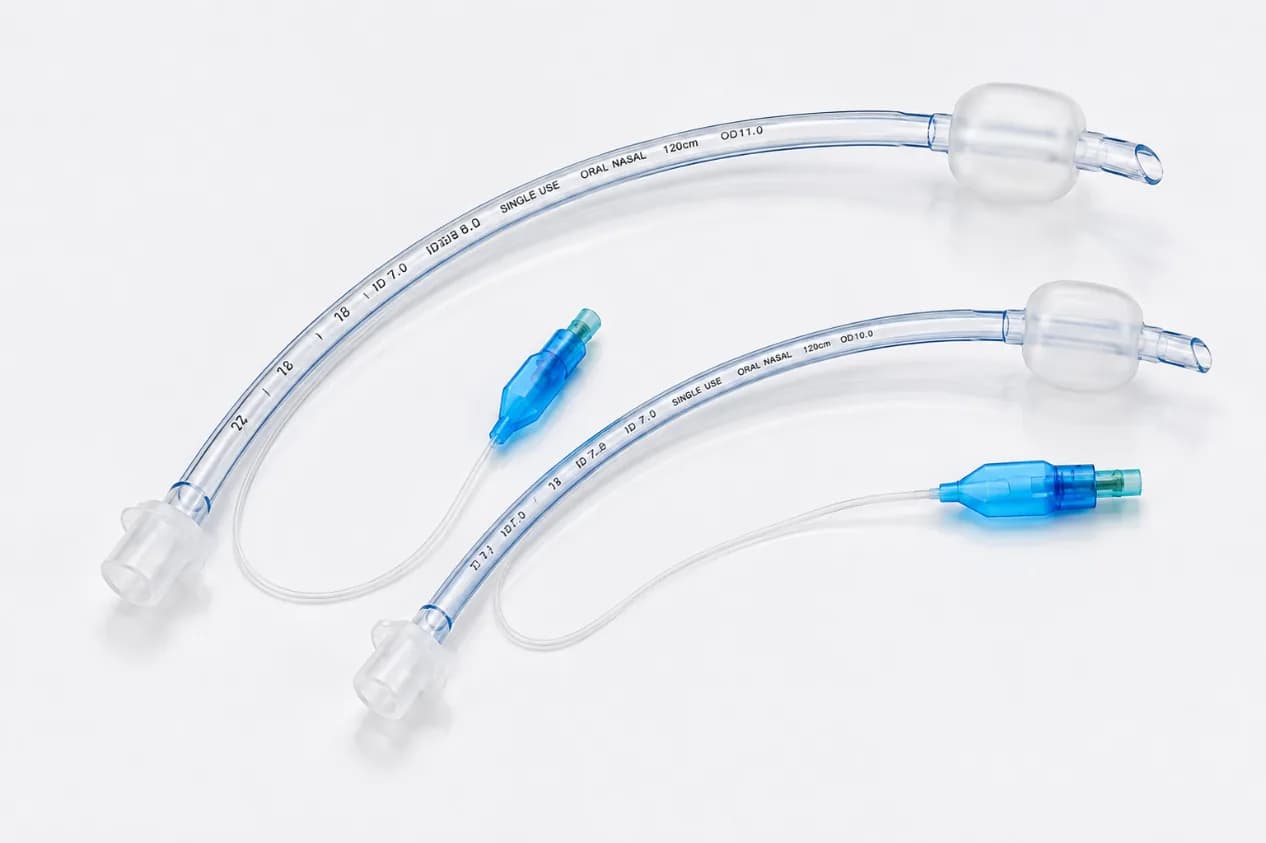
Standard Endotracheal Tube (ET Tube), Oral and Nasal
Airway patency and ventilation support
The Standard Endotracheal Tube is designed to maintain an open airway and support ventilation during medical procedures.
Key takeaways
- Single-use ET tube for oral or nasal intubation in anesthesia, intensive care and emergency airway management.
- Cuffed and uncuffed versions; the company catalog lists internal diameters from 2.0 to 10.0 mm, covering neonatal to adult sizes.
- Quote by internal diameter, cuff type, oral or nasal route and pack format.
The HOPE Medical standard endotracheal tube keeps the airway open and connects the patient to a ventilator or anesthesia breathing system. It is a smooth, flexible single-use ET tube for oral or nasal intubation, supplied in cuffed and uncuffed versions across a wide internal-diameter range. It is intended as an everyday tube for the intubation stock of hospitals, anesthesia departments and airway distributors.
Key Features
- Oral and nasal types
- Cuffed or uncuffed
- Internal diameter (ID) 2.0–10.0 mm in the catalog range
- Smooth, flexible tube body for airway access
- Supports mechanical ventilation
- Single use
Applications
General anesthesia, intensive care and emergency airway management, including mechanical ventilation. Cuffed tubes seal the trachea for positive-pressure ventilation; uncuffed tubes are still requested under some neonatal and pediatric protocols. For short elective cases where a supraglottic device is preferred, see our laryngeal mask airways.
How to specify when requesting a quote
- ID sizes (mm) and quantity per size
- Cuffed or uncuffed, oral or nasal
- Features your protocol requires, such as a Murphy eye or radiopaque line, so we can check them against the specification
- Unit pack and carton format, and private label if needed
- Destination market and required documents
Technical and purchasing information
The Standard Endotracheal Tube is designed to maintain an open airway and support ventilation during medical procedures. The final configuration, packaging and supporting documents are confirmed against your order and destination market.
- Application
- General anesthesia, intensive care, and emergency airway management
- Function
- Helps maintain airway patency and supports mechanical ventilation
- Type
- Oral / Nasal
- Design
- Smooth, flexible tube for reliable airway access
- Use
- Single use only
Application and configuration
Confirm the intended use, material, size and model before sample approval or production. Product-specific options are recorded in the quotation and specification sheet.
Packaging and cartons
Packaging, artwork and carton requirements can be reviewed for the selected product. Feasibility is confirmed for the exact order rather than assumed across the category.
Quality and documentation
Available quality and export records vary by product and market. Share the destination and required documents so they can be checked before approval.
Buyer questions, answered
Clear answers for preparing a comparable sourcing request for Standard Endotracheal Tube.
What size endotracheal tube is used for adults?
Adults are intubated with sizes from the upper part of the internal-diameter range, and women usually receive a slightly smaller tube than men; the final size is chosen by the clinician. The size printed on the tube is its internal diameter in millimeters. Our catalog range runs from 2.0 to 10.0 mm ID, so one supplier can cover neonatal, pediatric and adult sizes.
Cuffed vs uncuffed endotracheal tube: when is each used?
A cuffed tube has an inflatable balloon near the tip that seals the trachea, which supports positive-pressure ventilation and limits air leaking around the tube. Uncuffed tubes have no balloon and have traditionally been used in neonates and small children, although many pediatric protocols now use cuffed tubes. Both versions are listed for this product.
What is the difference between an endotracheal tube and a laryngeal mask airway?
An endotracheal tube passes through the vocal cords into the trachea and is usually sealed with a cuff. A laryngeal mask airway sits above the larynx and does not enter the trachea. ET tubes are used when a secured airway or longer ventilation is needed; laryngeal masks are common in shorter elective anesthesia.
How do you read an endotracheal tube size?
The main number printed on the tube is the internal diameter in millimeters, for example 7.5. Tubes typically also carry the outer diameter and centimeter depth markings. When ordering, list the ID sizes you need and the quantity per size.
Request the technical datasheet
Include your destination market, target quantity and preferred packaging.
Related products