

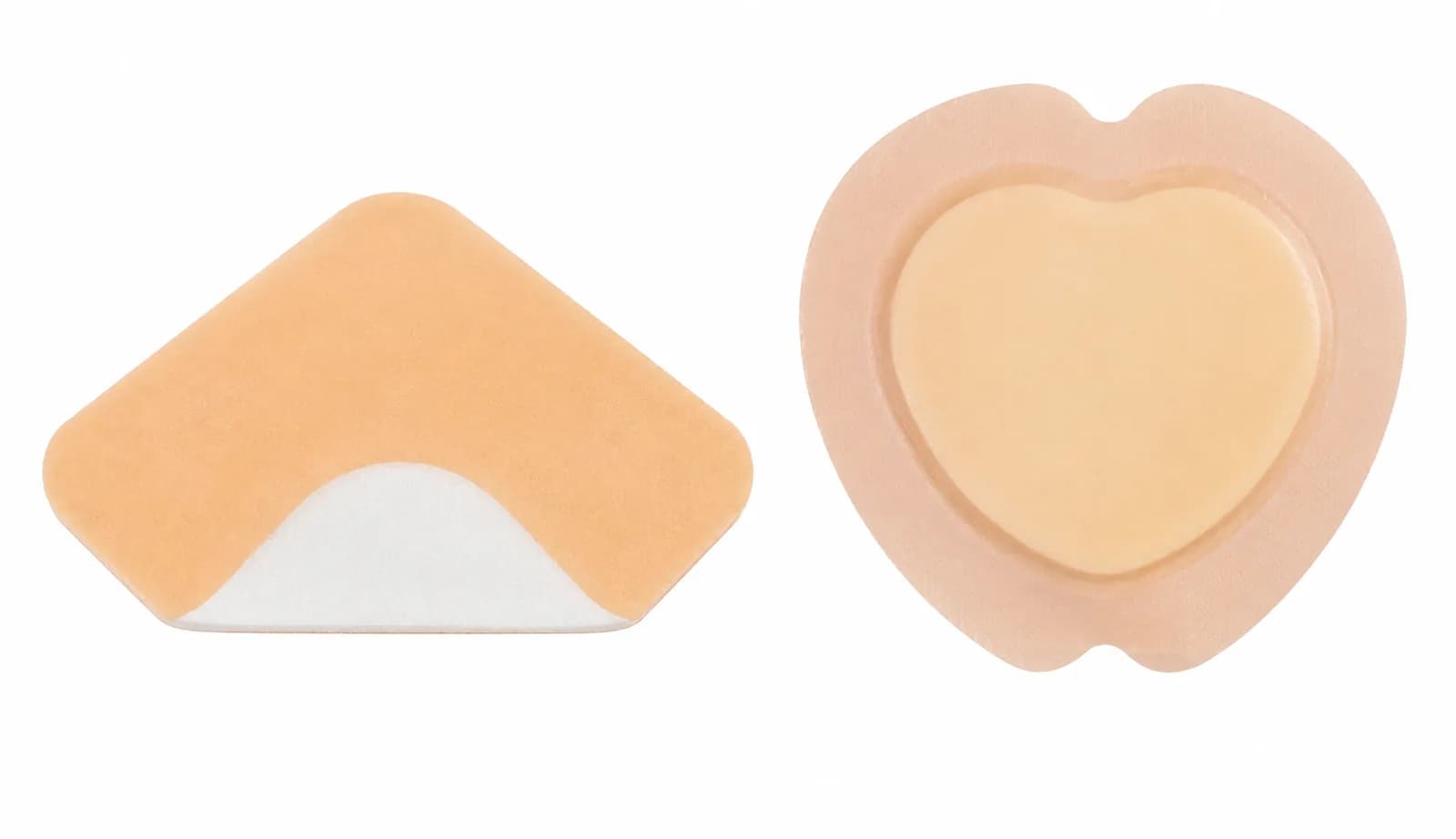
Wound care is one of the most stable categories in medical consumables: hospitals, clinics, nursing homes and pharmacies reorder dressings continuously. But “wound dressing” covers a dozen distinct product families, each with its own materials, standards and price logic. This guide walks through the main types and the specifications that matter when you order in bulk.
The Main Dressing Families at a Glance
| Type | Typical Material | Best For | Notes for Buyers |
|---|---|---|---|
| Gauze swabs & pads | 100% cotton, 19×15 mesh common | General cleaning, packing, secondary dressing | Sterile vs non-sterile changes packaging cost significantly |
| Non-woven swabs | Polyester/viscose blend | Alternative to cotton gauze, less linting | Usually 30–70 g/m²; 4-ply and 8-ply most common |
| Transparent film | Polyurethane + acrylic adhesive | IV sites, low-exudate wounds, shower protection | Check moisture vapor transmission rate (MVTR) |
| Foam dressings | Polyurethane foam, optional silicone border | Moderate-to-high exudate wounds, pressure injuries | Bordered vs non-bordered; silicone contact layer commands premium |
| Hydrocolloid | Gel-forming particles on film backing | Low-exudate wounds, blister care | Wear time up to 5–7 days is a key selling point |
| Hydrogel | Water/glycerin-based gel | Dry or necrotic wounds | Sheet, amorphous gel and impregnated gauze formats |
| Alginate | Calcium alginate fiber (seaweed-derived) | Heavily exuding wounds, cavity packing | Absorbency measured in times of own weight |
| Composite/island | Absorbent pad + adhesive border | Post-operative wounds | The highest-volume retail/hospital SKU in many markets |
Specifications That Decide Quality (and Price)
Material and weight. For gauze, mesh count (e.g. 19×15) and ply count define absorbency and cost. For non-wovens, grammage (g/m²) is the number to compare. Two quotes for “10×10 cm swabs” can differ 30% simply because one is 8-ply 17-thread and the other is 4-ply.
Sterility and packaging. Sterile dressings require validated EO or gamma sterilization, peel-pouch packaging with indicators, and lot traceability. Confirm whether the quote is per piece sterile-packed, or bulk non-sterile — this is the single most common cause of quotation misunderstandings.
Adhesives. Acrylic adhesives are standard; silicone adhesives (gentler removal, repositionable) are growing fast in Europe and North America and justify a higher price point, especially for elderly-care buyers.
Absorbency and MVTR. For foams, alginates and films, ask the factory for test data: absorbency (g/g or g/100cm²) and MVTR for films. Serious manufacturers can provide test reports against EN 13726 methods.
Certifications and Documents to Request
Most wound dressings are Class I or Class IIa medical devices depending on the market and claims. Before ordering, request: CE certificate (MDR) with the correct device class and scope, ISO 13485 factory certificate, test reports for the specific SKU, and for the US market, confirmation of FDA establishment registration and device listing. Match the certificate scope to the actual product — a CE certificate for gauze does not cover hydrocolloid dressings. See also: our guide to CE, ISO 13485, FDA and ASTM certificates.
QC Checks Before Shipment
A practical pre-shipment inspection for dressings covers: workmanship sampling by AQL (2.5 for major defects is common in this category), pouch seal integrity tests, sterility indicator presence, size and grammage verification against the datasheet, carton drop test, and label/IFU language check for the destination market. If you consolidate several SKUs, inspect each production lot rather than the mixed shipment.
Ordering Logistics: MOQ and Mixed Containers
Dressing MOQs are usually quoted per SKU per size. If you need breadth rather than depth — say, 15 SKUs across gauze, films and foams — ask about mixed-container programs: one 20ft or 40ft container combining multiple wound care lines, sometimes together with masks and other consumables. This is exactly the model a one-stop supplier is structured for. Learn more about our sourcing, OEM and mixed-container services.
FAQ
What is the typical MOQ for wound dressings?
It varies by product and packaging: bulk non-sterile gauze can start from one pallet per size, while sterile retail-packed SKUs usually require higher volumes per artwork. Ask for a tiered quote.
Sterile or non-sterile — which should I stock?
Hospitals buy both; retail and homecare channels are predominantly sterile-packed. Non-sterile bulk is cheaper but limits your customer base.
Can dressings be private-labeled?
Yes — pouch artwork, box design and IFU can all carry your brand once volumes justify printing plates. See also: private label, OEM and ODM – which model fits your launch.
How long is production lead time?
Standard items typically ship in 25–35 days after artwork confirmation; first orders with new artwork take longer than repeats.
Looking to consolidate your wound care purchasing? Send us your SKU list and target market — we’ll come back with specifications, certificates and a mixed-container plan. → Contact HOPE Medical